
R&D Tax Credits for AI-Generated Software Development
AI Agents write code. But they don't document it for tax compliance.
AI-generated software development is growing fast, but the IRS still requires the same level of documentation for R&D tax credits and Section 174 capitalization, regardless of whether the code was written by a human or an AI agent.
No time tracking
No ticket classification
No project attribution
AI agents do not assign work to business components or projects. Section G of Form 6765 requires QREs broken out by business component. Without attribution, that reporting is impossible.
Mixed pull requests
AI agents frequently combine unrelated work types into a single change. A code change that mixes Feature and Bugs cannot be cleanly classified for R&D credit or capitalization purposes.
Here's how it works
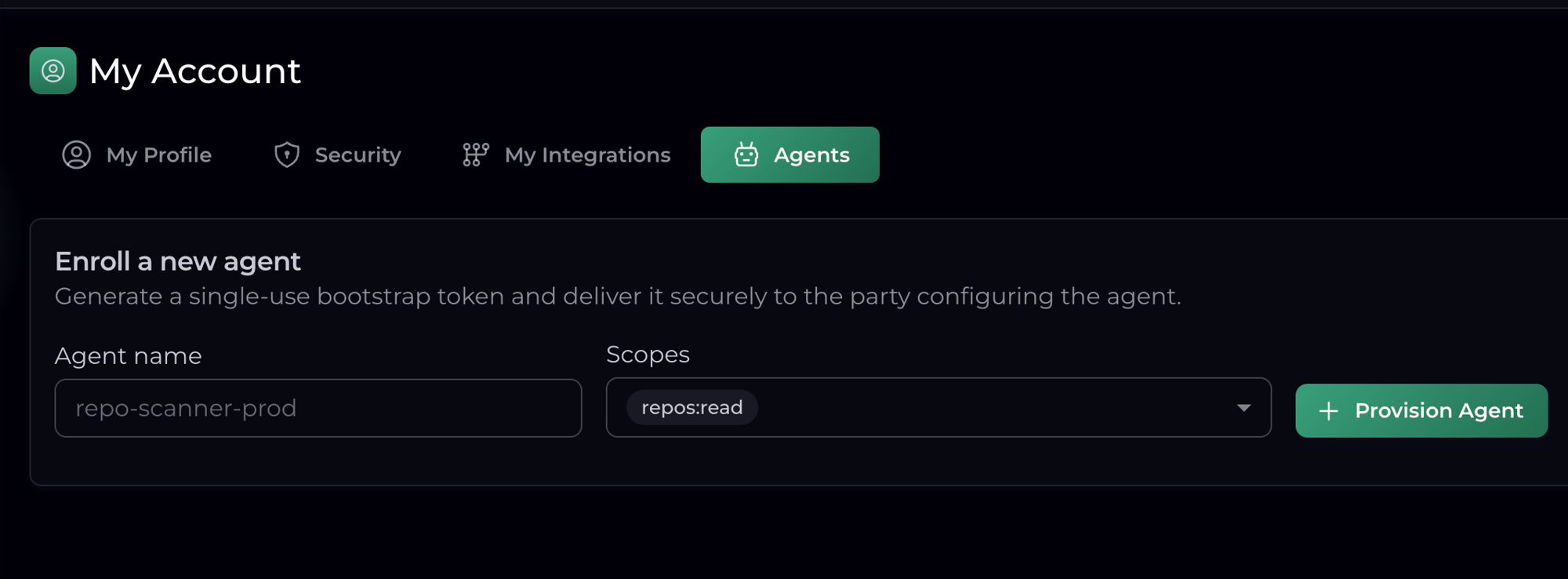
Install in minutes and deliver value
Step 1: Your Agent joins the workflow
Step 2: Every code change comes with full detail
Step 3: Reporting that covers your AI spend
Built for R&D tax compliance from day one
Automated time or effort recording
Actual working time, not wall-clock time, captured automatically at the code change level. Defensible effort documentation with zero timesheets.
Ticket type classification
Every code change classified as Feature, Bug, or Task. Clean classification enables accurate R&D eligibility analysis.
GitHub project mapping
Code changes assigned to one or more GitHub Projects automatically. Maps directly to Section G business-component reporting and project-level QRE allocation.
Clean PRs by design
Each code change stays scoped to one type of work and one project, so your development records are audit-ready as they're created.
Review time tracking
Time captured for code approvals and change requests, so supervision and review work count toward your credit too. Supports Section G wage classification.
Always current, zero maintenance
Rules and classifications stay up to date on their own. Nothing for your team to install, patch, or manage.
AI development documentation for every compliance need
-
R&D tax credits (Form 6765)
Time-based QRE allocation for AI-generated development work. Commit-level classification feeds directly into qualified research expense calculations. -
Section G business-component reporting
Project attribution at the commit level maps AI development activity to business components for the new Section G disclosure requirements on Form 6765. -
Section 174 software capitalization
Structured development records support Section 174 and 174A treatment, immediate expensing for qualifying domestic work and amortization for foreign work, whether the code was written by a human or an AI agent. -
Cap Labor reporting
Time and project data from AI-generated commits feeds CodeROI's Cap Labor module for capitalizable labor cost tracking and reporting.
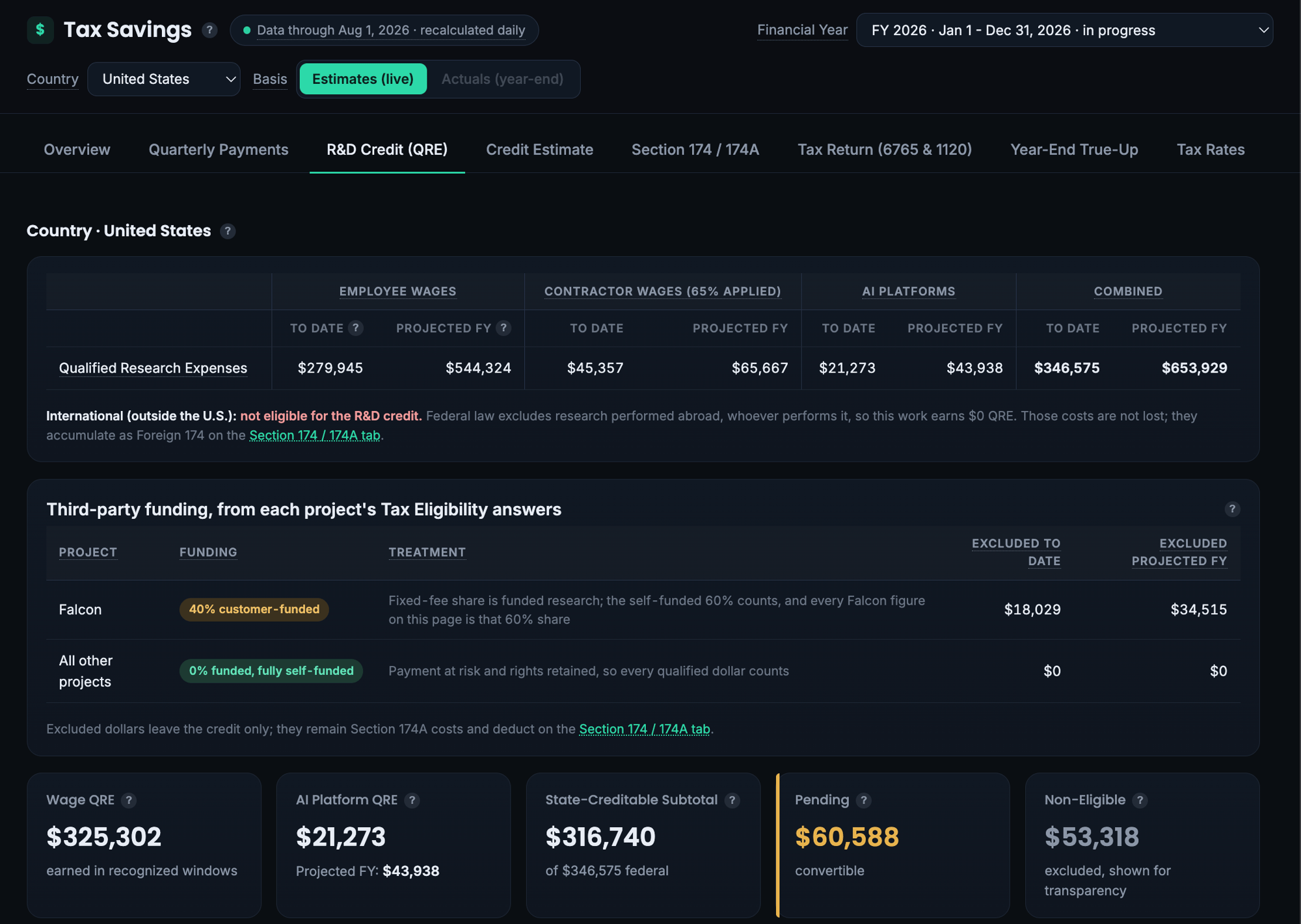
AI agent R&D tax credit documentation
Can AI-generated software development qualify for R&D tax credits?
Yes. The R&D tax credit under IRC Section 41 applies to qualified research expenses whether the development was performed by a human or an AI agent. The requirements are the same: the work must meet the four-part test, and the expenses must be properly documented and allocated. CodeROI creates the structured, contemporaneous documentation needed to support those claims at the code change level.
How does the AI agent classify commits?
Every commit is classified as exactly one of three types: Feature (new functionality, enhancements, or meaningful improvements), Bug (fixes to incorrect or broken behavior), or Task (maintenance, cleanup, configuration, refactoring, or documentation). This classification is required for R&D eligibility analysis and must be consistent across the pull request.
Does this work with Section G of Form 6765?
Yes. Section G requires companies to report qualified research expenses by business component. CodeROI's AI Agent extension assigns every commit to one or more GitHub Projects, which map to business components. This commit-level project attribution feeds directly into Section G reporting, including wage QRE breakdowns by direct research, direct supervision, and direct support.
What AI coding agents are supported by CodeROI?
CodeROI is agent-agnostic. It works with any AI coding agent that commits to your GitHub repositories, wherever that agent runs. The workflow rules and metadata requirements are delivered centrally and apply the same way to every agent, so new tools your team adopts are covered automatically with nothing extra to configure.
Why is the extension cloud-backed?
CodeROI needs the ability to update workflow logic, classification rules, metadata formats, and validation requirements centrally over time. A cloud-backed extension allows these updates to be delivered without requiring manual local updates. It also supports future jurisdiction-specific requirements and evolving IRS compliance standards.
Does CodeROI access the source code?
No. CodeROI analyzes metadata about how the code was developed, not the proprietary source code itself. The AI Agent extension captures structured information about time, classification, and project attribution. It does not inspect, read, or transmit the actual code content.
Does Section 174 apply to AI-generated software?
Yes. Sections 174 and 174A apply to software development costs whether the code was written by a human or an AI agent. Under current law, qualifying domestic research costs can generally be deducted immediately under Section 174A, while foreign research costs are still capitalized and amortized. Both treatments require documentation of the underlying development activity, and CodeROI's code change level records provide that support for AI-generated work.